If you’ve ever worked around packaging, you already know one thing. Filling the pouch is not the real challenge. The real game is sealing.
A pouch can look fine at first. But if the seal is weak, it won’t survive handling, transport, or storage. That’s where sealing becomes the most important part of Pouch Packing Machines.
People usually notice problems only when pouches start opening or leaking. Most of the time, the issue is not big. It comes down to how sealing is being done.
What Sealing Actually Does
Sealing is just closing the pouch, but it has to be done properly.
In Pouch Packing Machines, the machine presses the edges of the pouch with heat so they stick together. That joint is what holds everything inside.
If sealing is right:
- The pouch stays closed
- The product stays safe
- The pack looks clean
If sealing is off, even slightly, problems start showing up later.
What Happens During Sealing
The process is quick, but there’s a lot happening in that short moment. The filled pouch moves forward. It reaches the sealing area. Heated jaws press the open edges.
That’s it on the surface. But inside that step:
- The material softens
- Pressure joins both sides
- It cools and becomes firm
This cycle keeps running again and again in Pouch Packing Machines.
Types of Sealing You Will See
Not every machine works the same way. Different setups use different sealing methods depending on the product and material.
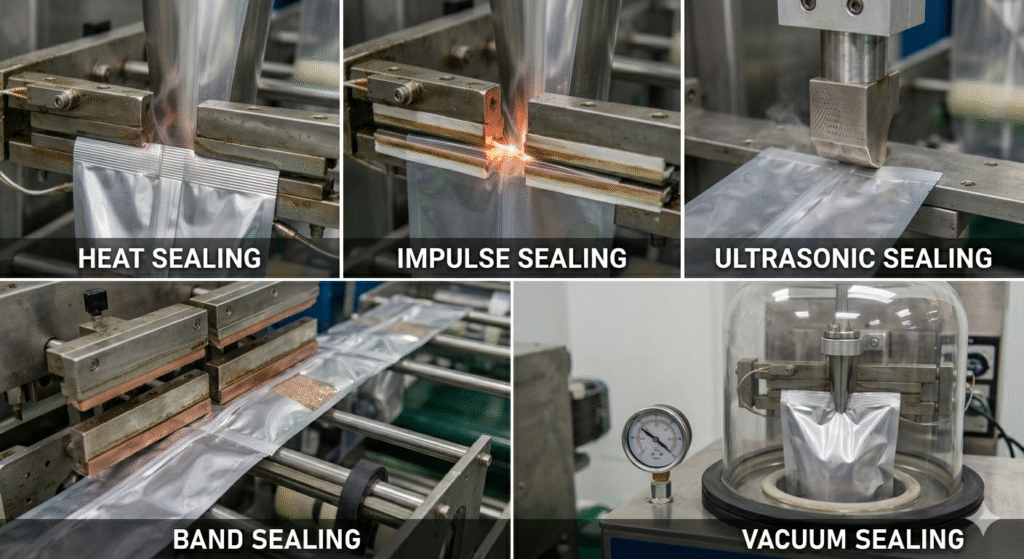
Heat Sealing
This is the one you’ll see most often. The machine uses heated jaws to press and seal the pouch. It’s simple and works well for most packaging films.
That’s why many Pouch Packing Machines rely on heat sealing for regular production.
Impulse Sealing
This one works only when needed. Instead of constant heat, it sends heat in short bursts during sealing. It gives better control, especially when the material is sensitive.
You’ll usually find this in Pouch Packing Machines, where overheating can be a problem.
Ultrasonic Sealing
This method feels a bit different. It uses vibration to create heat at the sealing point. So even if there is a little product near the edge, sealing can still happen properly.
Some advanced Pouch Packing Machines use this when clean sealing is required.
Band Sealing
Band sealing is more common in continuous setups. The pouch moves through heated belts, and sealing happens while it keeps moving.
This works well in high-speed Pouch Packing Machines where stopping is not an option.
Vacuum Sealing
Here, air is removed before sealing. This helps in keeping the product fresh for longer. It’s often used in food packaging. Certain Pouch Packing Machines are designed mainly for this purpose.
Where Things Usually Go Wrong
Sealing problems don’t always come from big faults. Most of the time, it’s small things.
You may notice:
- Edges not sticking properly
- Slight wrinkles in the seal
- Burn marks on the film
- Pouches open during handling
These issues directly affect the output of Pouch Packing Machines.
What Affects Sealing Quality
From experience, a few things matter more than others.
Temperature
Too low, and the seal won’t hold. Too high, and the film gets damaged.
Pressure
Without proper pressure, layers won’t bond well.
Timing
If the sealing time is not right, the result won’t be consistent.
Material
Some films seal easily; others need more control.
These small adjustments make a big difference in Pouch Packing Machines.
Simple Fixes That Actually Help
You don’t always need technical changes. Basic troubleshooting helps resolve most problems.
- Clean the sealing surface frequently
- Monitor the temperature settings carefully
- Use high-quality films consistently
- Do not change the speeds often
- Monitor your outputs
Such simple practices can help you get better results using Pouch Packing Machines.
Why Should Sealing be Given Importance?
Usually, attention is paid to speed and productivity figures. But sealing quietly decides the final quality.
If the seal fails, the entire pack fails.
That’s why in Pouch Packing Machines, sealing is not just another step. It’s the step that actually completes the job.
Final Thoughts
Once you spend enough time around these machines, you start noticing that sealing is where most real problems begin.
It’s not complicated, but it needs attention. Small adjustments, regular checks, and a bit of observation go a long way.
With proper handling, Pouch Packing Machines can give consistent and reliable output without much trouble.
FAQs
1. What does sealing mean in pouch packaging?
Sealing is the process that occurs once the package is filled.
2. Why do pouches open?
This happens mostly due to the incorrect setting of the sealing temperature and pressure.
3. Which sealing method is most common?
Heat sealing is used in most cases.
4. Can sealing problems be fixed easily?
Yes, small adjustments often solve the issue.
5. Does sealing affect product safety?
Yes, poor sealing can lead to leakage and spoilage.
For more updates on packaging machines and maintenance tips, follow us on Facebook and Instagram.